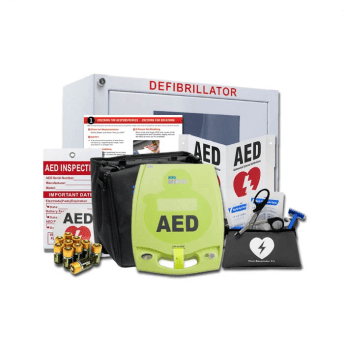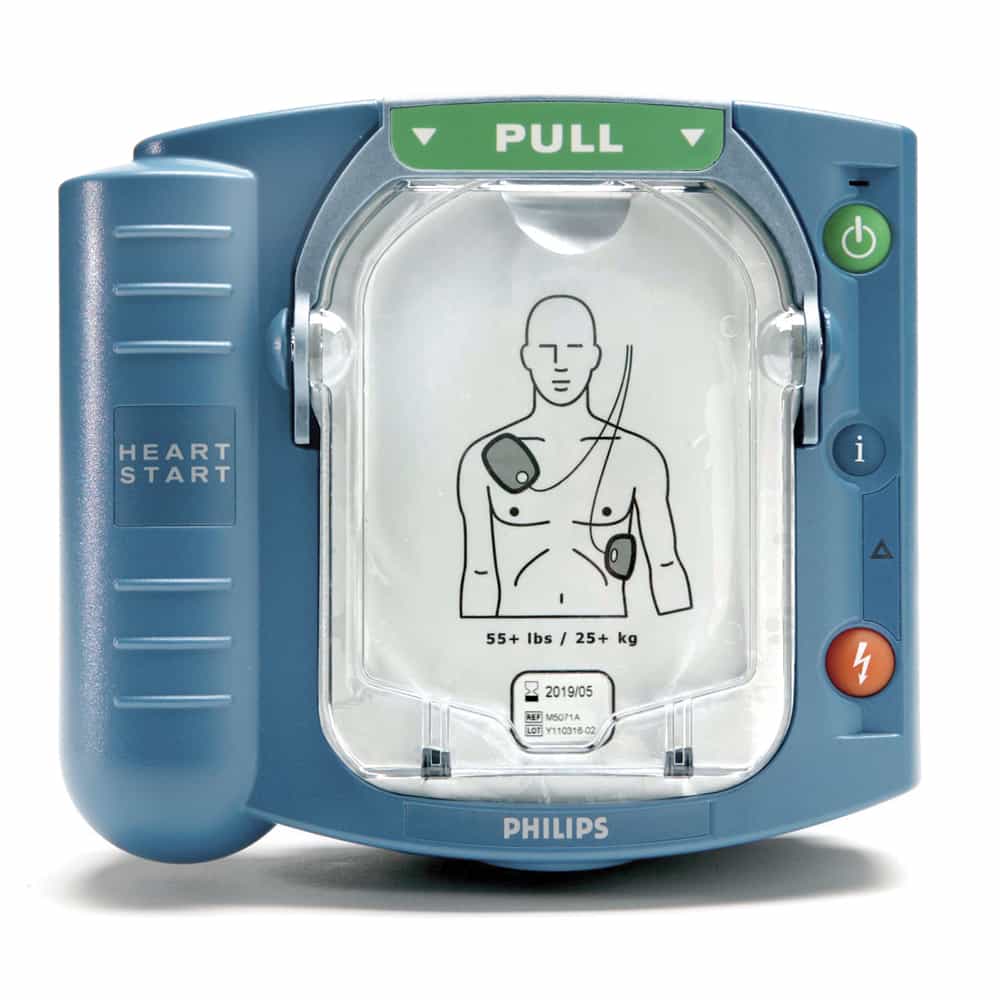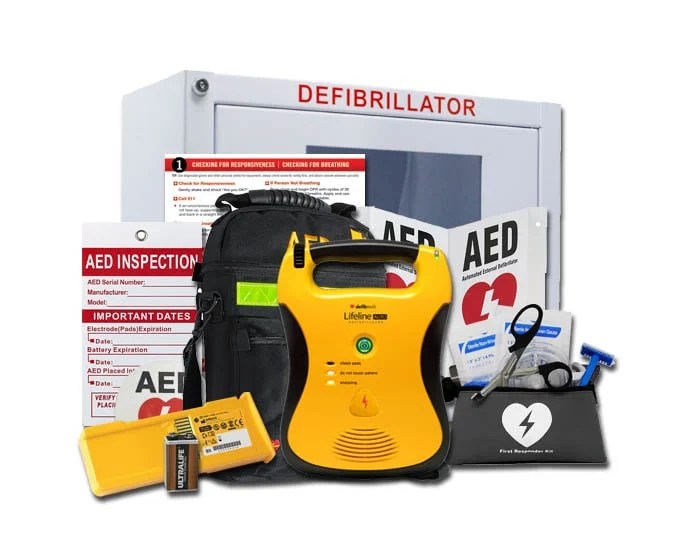
Why AED Maintenance Is a Life-or-Death Responsibility
Owning an Automated External Defibrillator (AED) is one of the most impactful safety decisions any organization can make. But here is a fact that should concern every facility manager and safety officer: nearly half of all AED failures are caused by preventable maintenance issues, specifically expired batteries (23.2%) and deteriorated electrode pads (23.7%), according to research from the Sudden Cardiac Arrest Foundation.
That is not a technology problem. It is a maintenance problem.
During sudden cardiac arrest, survival rates drop approximately 10% for every minute without defibrillation. A device that fails because someone skipped an inspection or forgot to replace expired pads turns a rescue tool into a false sense of security. This guide provides the complete AED maintenance checklist that facility managers, safety officers, and AED program coordinators need to keep every device rescue-ready, every day.
Need help managing your AED program? Learn about our AED Total Solution.
Get certified in CPR

Adult & Pediatric First Aid/CPR/AED — Blended Learning
Self-paced online + in-person skills check. 2-year certification.
CPR, AED & First Aid Certification
Instructor-led on-site. Practice on real manikins and AED trainers.
How Often Should an AED Be Checked?
One of the most common questions we hear is, “how often should an AED be checked?” The answer depends on the type of inspection, but the general framework includes four tiers:
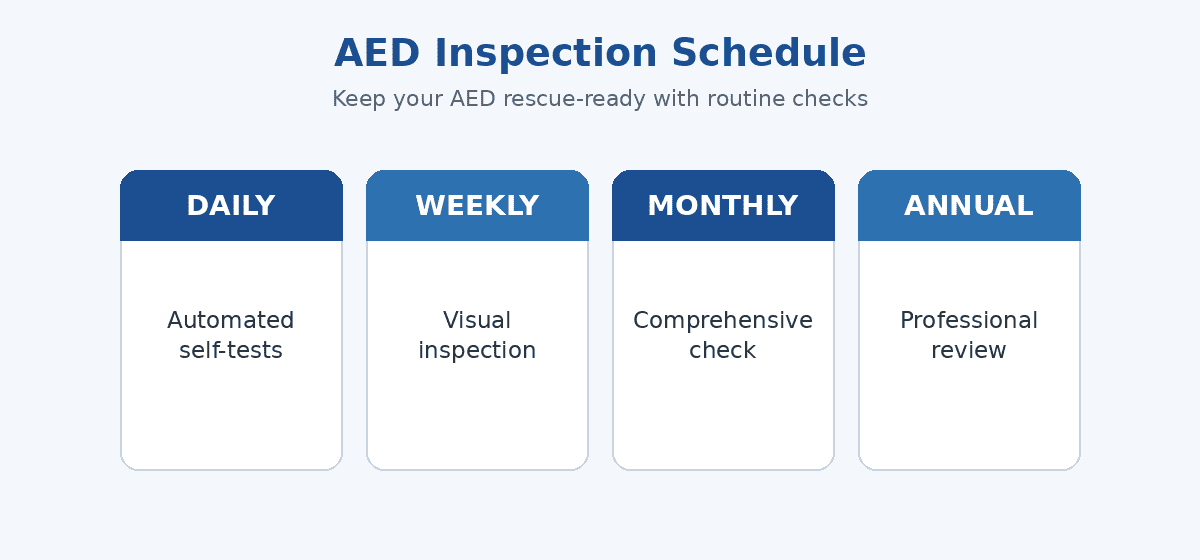
- Daily: Automated self-tests (performed by the device itself)
- Weekly or Biweekly: Quick visual inspections by a designated responder
- Monthly: Comprehensive manual inspections documented for compliance
- Annually: Full professional review including firmware, diagnostics, and program audit
Most modern AEDs from manufacturers like Philips, ZOLL, HeartSine, and Defibtech perform automatic self-tests on a daily, weekly, or monthly cycle. These self-tests check internal circuitry, capacitor charge, and basic functionality. However, self-tests alone are not enough. They cannot verify pad expiration dates, check for physical damage, or confirm that rescue accessories are present and accounted for.
The Complete AED Inspection Checklist
Use this AED inspection checklist during your regular maintenance rounds. Whether you print it out and laminate it next to your AED cabinet or track it digitally, consistency is what keeps your AED rescue-ready.
Weekly Visual Inspection (2-3 Minutes)
This quick check should be assigned to a specific person on your team. It takes less than three minutes and catches the most common issues before they become emergencies.
- Status indicator check: Confirm the AED displays a green light, checkmark, or “rescue ready” indicator. A yellow or red light means the device needs immediate attention.
- Physical condition: Look for cracks, dents, moisture, or any visible damage to the case or cables.
- Location and accessibility: Verify the AED is in its designated spot, unobstructed, and easy to reach. It should not be locked away, blocked by furniture, or hidden behind other equipment.
- Signage visibility: Confirm that AED signs are visible from multiple directions and not blocked or removed.
Monthly Comprehensive Inspection (10-15 Minutes)
This is your primary documented AED maintenance checklist. It should be logged with the date, inspector name, findings, and any corrective actions taken. Many states and regulatory bodies require these records to be kept on file for a minimum of three years.
Device and Consumables
- Electrode pad expiration: Check the expiration date printed on the pad packaging. Adult pads typically last 2 to 2.5 years from manufacture. Replace immediately if expired or within 30 days of expiration.
- Pediatric pad expiration: If your facility serves children (schools, daycares, community pools), verify pediatric pads are current and accessible.
- Battery expiration and charge: Check the battery expiration date. Battery life varies by manufacturer:
- Philips HeartStart: approximately 4 years
- ZOLL AED Plus: approximately 5 years
- HeartSine Samaritan: 4 years (combined Pad-Pak)
- Cardiac Science Powerheart: approximately 4 years
- Defibtech Lifeline: 5 to 7 years depending on model
- Physio-Control LIFEPAK: approximately 4 years
- Self-test verification: Review the most recent self-test result. Most AEDs log these internally. Consult your device manual for how to access the test history.
- Software and firmware: Note the current software version. Some newer models like the ZOLL AED 3 and LIFEPAK CR2 support WiFi connectivity for remote monitoring and updates.
Browse replacement pads, batteries, and AED accessories.
Rescue Accessories and Supplies
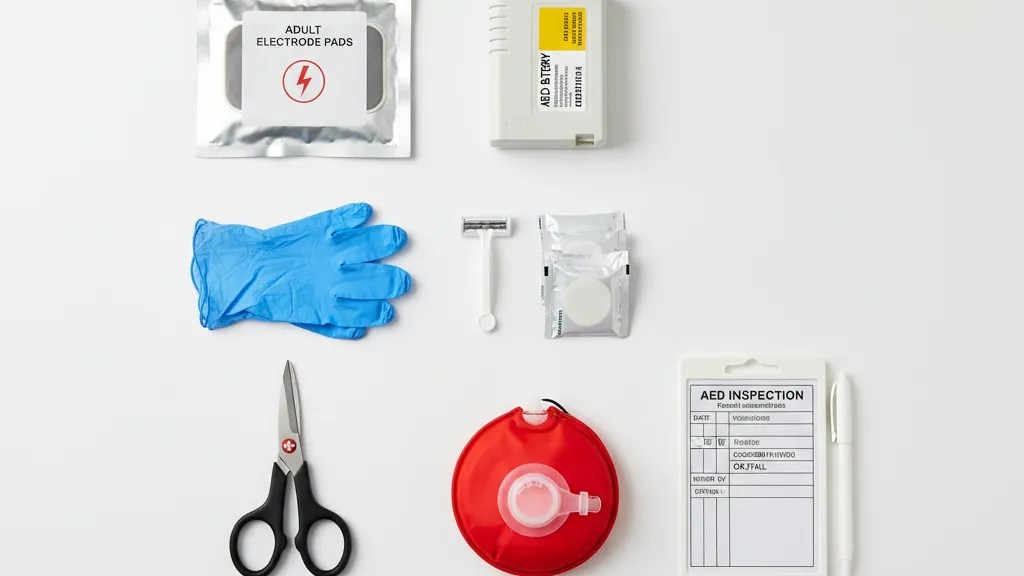
- First responder kit: Confirm your first responder kit is present and complete. It should contain a razor, scissors, antiseptic towelettes, nitrile gloves, and a pocket CPR mask.
- Spare pads and battery: Verify you have at least one spare set of electrode pads and a backup battery on site. After any deployment, these spares allow you to get the AED back into service immediately.
- Instruction manual: The user manual or quick-reference card should be stored with the AED.
Cabinet and Storage
- Cabinet condition: Check that the AED wall cabinet opens and closes properly. Test any alarm or strobe light features.
- ADA compliance: The cabinet should protrude no more than 4 inches from the wall, with the handle no higher than 48 inches from the floor.
- Environmental conditions: AEDs should be stored between 32 degrees F and 122 degrees F (0 degrees C to 50 degrees C). Avoid direct sunlight, extreme humidity, or locations near heat sources.
Documentation
- Log the inspection: Record the date, inspector name, device serial number, status indicator reading, and any issues found.
- Note corrective actions: If something failed, document what you did to fix it and the date it was resolved.
- Update the inspection tag (I-Tag): If you use physical inspection cards on your cabinet, mark the current month as inspected.
Annual Professional Review
Once a year, conduct a deeper evaluation of your entire AED program. This goes beyond checking individual devices:
- Full device diagnostics: Run manufacturer-recommended diagnostic tests on each unit.
- Firmware updates: Apply any available software updates from the manufacturer.
- Training verification: Confirm that designated responders have current CPR/AED certifications. Certifications typically expire every two years.
- Program registration: Verify your AED program registration is current with local EMS authorities and any state-mandated registries.
- Placement assessment: Review whether your AED locations still make sense based on building layout changes, new construction, or shifts in foot traffic patterns.
- Manufacturer recall check: Verify your devices and accessories are not subject to any active FDA recalls.
5 Common AED Maintenance Mistakes (and How to Avoid Them)
Even well-intentioned AED programs fall into these traps. Here is what to watch for:
1. Relying Solely on Self-Tests
AED self-tests are valuable, but they have limitations. They cannot check pad expiration dates, verify that rescue accessories are present, or detect physical damage to cables and connectors. Always pair automated self-tests with hands-on inspections.
2. Ignoring Expiration Dates Until the Last Minute
Waiting for the AED status light to turn yellow before ordering replacement pads or batteries is cutting it dangerously close. Supply chain delays, back-ordered parts, or simply forgetting to place the order can leave you without a functioning device for days or weeks. Order replacements at least 90 days before expiration.
3. No Designated AED Coordinator
When maintenance is “everyone’s job,” it becomes no one’s job. Assign a specific AED coordinator (and a backup) who is responsible for inspections, supply management, and training records. This single change eliminates most maintenance gaps.
4. Forgetting Post-Event Procedures
After an AED is used in a rescue event, it needs immediate attention. Electrode pads are single-use and must be replaced. The battery may need replacement depending on how much energy was delivered. Event data should be downloaded and provided to EMS or the medical director for review. The device must be cleaned, restocked, and returned to service as quickly as possible.
5. Poor Record Keeping
Inspections that are not documented might as well not have happened, especially from a legal and compliance standpoint. Whether you use paper logs, spreadsheets, or a digital management platform, keep inspection records for a minimum of three years. These records demonstrate due diligence and protect your organization in the event of a liability claim. For a complete overview of federal and state-level standards, see our AED compliance requirements.
Simplify your AED compliance with Response Ready’s managed program.

RECOMMENDED
HeartSine Samaritan 350P AED Package
Compact, fully-automatic AED designed for first-time responders. Pads, battery, carry case and wall sign included.
Creating a Printable AED Checklist for Your Facility
A practical AED checklist should be posted at or near each AED station. Here is what to include on your printed checklist:
| Checklist Item | Frequency | Pass/Fail |
|---|---|---|
| Status indicator shows “ready” (green light/checkmark) | Weekly | Pass / Fail |
| AED is visible, accessible, and unobstructed | Weekly | Pass / Fail |
| No visible physical damage to device or cables | Weekly | Pass / Fail |
| Signage is visible from multiple directions | Weekly | Pass / Fail |
| Adult electrode pads within expiration date | Monthly | Pass / Fail |
| Pediatric pads within expiration date (if applicable) | Monthly | Pass / Fail |
| Battery within expiration date and charged | Monthly | Pass / Fail |
| Spare pads and battery on site | Monthly | Pass / Fail |
| First responder kit complete (razor, scissors, gloves, mask, wipes) | Monthly | Pass / Fail |
| User manual or quick-reference card present | Monthly | Pass / Fail |
| Cabinet opens properly, alarm/strobe functional | Monthly | Pass / Fail |
| Inspection documented with date and inspector name | Monthly | Pass / Fail |
| Responder CPR/AED certifications current | Annually | Pass / Fail |
| AED program registration current | Annually | Pass / Fail |
| Firmware and software up to date | Annually | Pass / Fail |
| No active manufacturer recalls | Annually | Pass / Fail |
We recommend printing this checklist, laminating it, and attaching it directly to or near each AED cabinet. Assign one person per location to complete it on a set schedule, and store completed checklists in a central binder or digital system for audit purposes.
How AED Program Management Simplifies Maintenance
For organizations managing multiple AEDs across different locations, keeping up with individual inspection schedules, expiration dates, and compliance documentation can become overwhelming. This is exactly the problem that a managed AED program solves.
Response Ready’s AED Total Solution program is designed to take the guesswork out of AED maintenance by providing:
- Automated expiration alerts: Receive notifications 90, 60, and 30 days before pads or batteries expire, so replacements are ordered well in advance.
- Mobile app inspections: Conduct and document inspections using a guided mobile app with QR code scanning, photo documentation, and automatic syncing to a centralized dashboard.
- Medical director oversight: Dr. Ann Jarris (MD, MBA, FACEP) provides physician-level oversight for program compliance and post-event medical review.
- Consumable replacement included: In the AED rental program, all pad and battery replacements are included at no additional cost.
- Post-event loaner program: If your AED is used in a rescue, a loaner device is shipped immediately at no charge so your facility is never left unprotected.
Whether you manage 1 AED or 100, a structured program eliminates the most common maintenance failures and creates an audit-ready compliance trail.
When to Replace Your AED
AEDs are built to last, but they do not last forever. Here are the key indicators that it may be time to upgrade:
- End of warranty: Most AEDs carry a 7 to 8 year manufacturer warranty. Once the warranty expires, repair support and parts availability may decrease.
- Manufacturer end-of-life: When a manufacturer discontinues a model, replacement parts and consumables eventually become unavailable.
- Technology upgrades: Newer AEDs offer features like real-time CPR feedback, WiFi connectivity, high-resolution displays, and dual-language support that can significantly improve rescue outcomes.
- Repeated self-test failures: Persistent error indicators after replacing pads and batteries may signal an internal issue that warrants device replacement.
Response Ready carries AEDs from all six FDA-approved manufacturers, so when it is time to upgrade, you can compare every option in one place and get an unbiased recommendation based on your facility’s needs.
Frequently Asked Questions About AED Maintenance
How often should an AED be inspected?
AEDs should be visually inspected weekly (a 2 to 3 minute check of the status indicator, physical condition, and accessibility). A more thorough monthly inspection should document pad and battery expiration dates, rescue accessory completeness, and cabinet condition. A full professional review should be conducted annually.
What happens if AED pads expire?
Expired electrode pads may not adhere properly to the patient’s skin or conduct the electrical signal effectively. This can prevent the AED from delivering a life-saving shock. Replace pads immediately if they are expired or within 30 days of expiration. Keep at least one spare set on site at all times.
Do AEDs require professional servicing?
Most AEDs perform automatic self-tests and do not require routine professional servicing for day-to-day operation. However, an annual professional review is recommended to run full diagnostics, apply firmware updates, and verify program compliance. Organizations with multiple units benefit from a managed program like Response Ready’s AED Total Solution.
How long do AED batteries last?
AED battery lifespan varies by manufacturer, typically ranging from 4 to 7 years. Philips, HeartSine, Cardiac Science, and Physio-Control batteries last approximately 4 years. ZOLL batteries last about 5 years. Defibtech batteries can last 5 to 7 years depending on the model. Always check the printed expiration date during your monthly inspection.
What should I do after my AED is used in an emergency?
After any rescue event, replace the single-use electrode pads immediately. Check the battery level and replace if needed. Download the event data for EMS or your medical director to review. Clean the device, restock all accessories, and run a manual self-test before returning the AED to service. If you are enrolled in a managed program, contact your provider for a loaner unit while your device is being serviced.

Not sure which AED or training fits your needs?
A Response Ready product expert walks you through it — no obligation.
Your AED Is Only as Good as Your Maintenance Program
An AED sitting on the wall with expired pads and a dead battery is not an emergency resource. It is a liability. The difference between a device that saves a life and one that fails in the critical moment comes down to consistent, documented maintenance.
Use this AED maintenance checklist as your starting point. Assign an AED coordinator, establish a regular inspection schedule, and track every check. For organizations that want to eliminate the complexity entirely, explore Response Ready’s AED Total Solution for hands-off, expert-managed program compliance.
Questions about AED maintenance, replacement supplies, or program management? Contact our team or call us at 858-665-2025. With over a decade of experience as authorized distributors for every FDA-approved AED manufacturer, we are here to make sure your devices are always rescue-ready.