AED buyers guide how to choose the right defibrillator
Choosing the right Automated External Defibrillator (AED) is an important decision that can directly impact emergency response and safety. With different models, features, and price ranges available, it is essential to understand what to look for before making a purchase.
In this AED buyers guide, we explain how AEDs work, what features matter most, and how to choose the best option for your specific situation.

What is an AED and why is it important
An AED is a life-saving device used to treat sudden cardiac arrest. It analyzes the heart rhythm and delivers a shock if needed to restore a normal heartbeat. Having an AED available significantly increases survival chances when used quickly.
If you want to better understand how AEDs work in emergency situations, you can learn more on the American Heart Association website.
AEDs are commonly used in workplaces, public spaces, sports facilities, and industrial environments where immediate response is critical.
Key factors to consider when buying an AED
Before choosing an AED, it is important to evaluate your environment and specific needs. Not every device is suitable for every situation.
Ease of use
Most AEDs are designed for non-medical users, but some models offer clearer voice instructions and visual guidance. This is especially important in public environments where untrained users may need to act quickly.
Indoor vs outdoor use
Consider where the AED will be placed. Outdoor environments may require additional protection and visibility. Storing your device in clearly marked first aid cabinets improves accessibility and response time.
Maintenance and lifespan
AEDs require regular maintenance, including battery and electrode replacement. If you prefer a solution with less responsibility, you may also want to explore AED rental options instead of purchasing.
Total cost of ownership
The price of an AED is not just the purchase cost. You should also consider long-term expenses such as maintenance, replacement parts, and servicing.
If you want to compare both options, you can read more in our AED rental vs purchase guide.
Types of AEDs available
There are different types of AEDs depending on the use case. Understanding these differences helps you choose the right model.
Fully automatic AEDs
These devices deliver a shock automatically without requiring the user to press a button. They are ideal for public environments and situations where ease of use is critical.
Semi-automatic AEDs
These require the user to press a button to deliver the shock. They offer slightly more control and are often used in professional settings.
AEDs for professional use
Some AEDs are designed for trained responders and offer additional features such as advanced monitoring.
You can explore different models and compare features on the AED product category page.
Where should you place an AED
Placement is just as important as choosing the right device. An AED should always be:
- Clearly visible
- Easy to access
- Located in high-traffic or high-risk areas
Combining your AED with supporting equipment improves your overall emergency response. For example, adding first aid kits allows you to respond to a wide range of injuries alongside cardiac emergencies.
In higher-risk environments, bleeding control kits provide essential tools for severe injuries and life-threatening situations.
AED for different environments
Workplace
For offices and warehouses, reliability and ease of use are key. A fixed installation with clear visibility ensures quick access during emergencies. For specialized clinical settings like AEDs for dental offices, compact models with intuitive operation are especially important given the unique cardiac risks in patient care environments.
Public spaces
In locations such as schools, shopping centers, or sports facilities, fully automatic AEDs are often the best choice due to their simplicity and accessibility.
Industrial environments
Durability and mobility are important. In these cases, combining an AED with mobile trauma kits allows responders to reach incidents quickly across larger areas.
Top AED Recommendations by Use Case
Based on the factors above, here are Response Ready’s top AED picks for different environments:
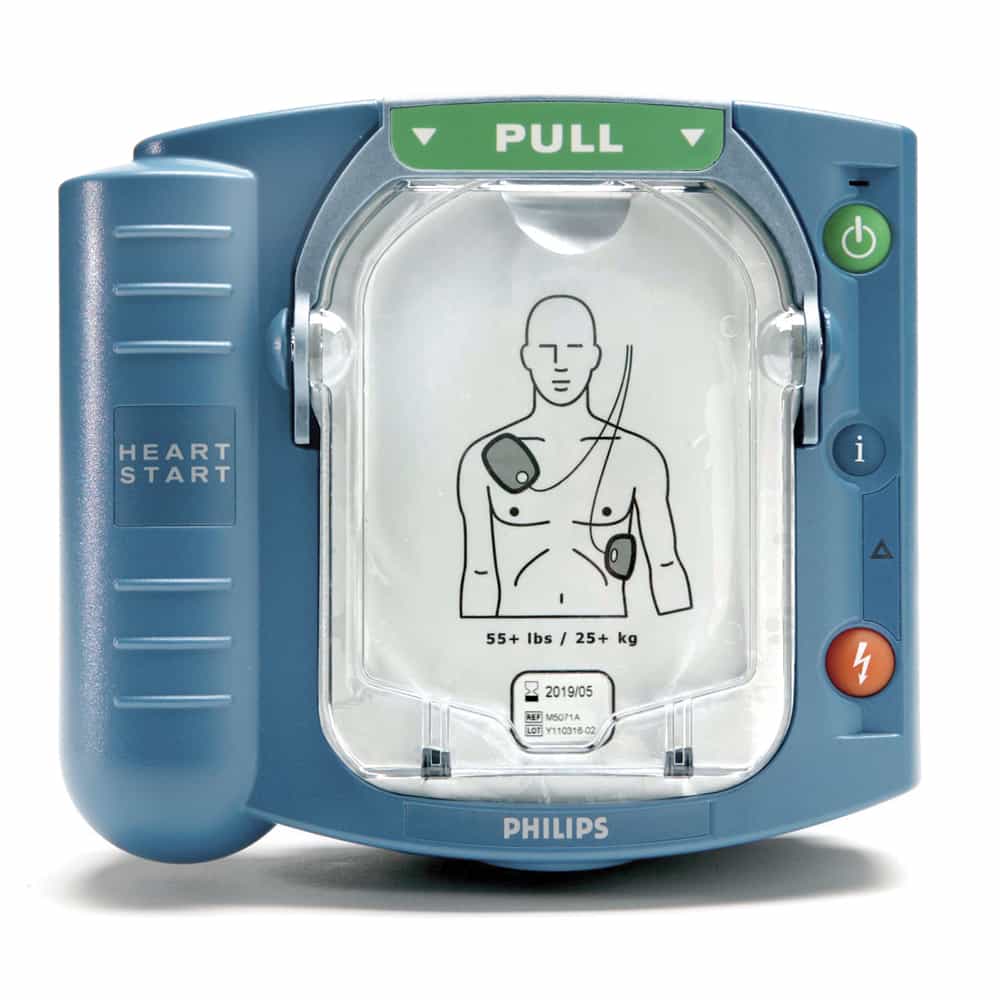
- Best for offices and schools: Philips HeartStart OnSite Value Package provides everything you need in a single bundle with voice-guided simplicity.
- Best real-time CPR coaching: ZOLL AED 3 monitors compression depth and rate, helping even untrained rescuers deliver effective CPR.
- Best fully automatic option: ZOLL AED Plus (Fully Automatic) removes the need to press a shock button, reducing hesitation during emergencies.
- Most portable: HeartSine Samaritan PAD 350P at just 2.4 pounds is ideal for mobile teams and outdoor events.
- Best for healthcare environments: LIFEPAK CR2 offers Wi-Fi connectivity for automatic software updates and readiness monitoring.
- Best value recertified option: ZOLL AED 3 (Recertified) delivers the same life-saving capability at a lower price point.
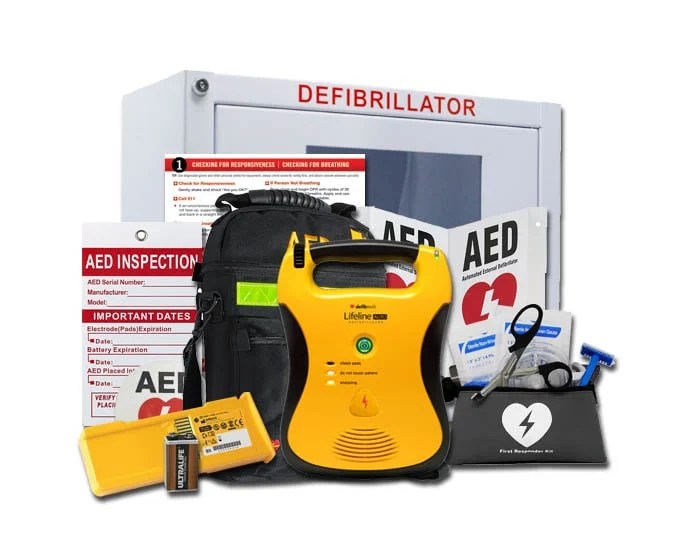
- Best budget-friendly AED: Defibtech Lifeline balances reliability with affordability through its straightforward two-button design.
Every AED listed above ships with pads, a battery, and Response Ready’s program management support. Visit our AED maintenance checklist to keep your device rescue-ready year-round.
Should you buy or rent an AED
For many organizations, the decision is not just which AED to choose, but also whether to buy or rent.
- Buying is ideal for long-term use and offers better value over time
- Renting provides flexibility and includes maintenance
If you are unsure which option fits your situation, you can compare both in detail in our AED rental vs purchase guide.
Conclusion choosing the right AED
Choosing the right AED depends on your environment, budget, and the level of responsibility you are willing to take on. It is important to consider not only the initial cost, but also long-term maintenance, usability, and accessibility within your location.
By understanding the key features, types, and placement considerations, you can make a more informed decision that fits your specific needs. Investing in the right AED is not just about compliance, it is about creating a safer environment and being prepared to act effectively when every second counts.