The essential guide to selecting an AED for schools and community centers
Placing an Automated External Defibrillator (AED) in your school or community center is one of the most important decisions you can make for the safety of your people. But with so many options, it’s easy to feel overwhelmed. You’re not just buying a device, you’re creating a lifeline. This guide cuts through the noise to give you a clear framework for choosing an AED that is simple enough for anyone to use, robust enough for a public space, and effective for all ages.
When a sudden cardiac arrest (SCA) occurs, every second is critical. Choosing the right equipment and support system ensures those seconds are used to save a life, not lost to confusion or device failure.
Why every minute matters in your community
Sudden cardiac arrest doesn’t discriminate. It is a leading cause of death among youth, affecting thousands of children each year, and research shows that two out of every fifty high schools can expect an SCA event annually. The reality is that without immediate intervention, the chances of survival drop by 7 to 10 percent for every minute that passes.
This narrow window is why on site AEDs are so crucial. In schools with comprehensive AED programs, survival rates can soar to over 70 percent, a dramatic increase from the national average of less than 10 percent. An AED empowers any bystander, from a teacher to a parent volunteer, to deliver life saving care in the vital moments before professional help arrives. Equipping your facility isn’t just a safety measure, it’s a commitment to protecting every person who walks through your doors.
Your essential evaluation framework for public access AEDs
Choosing an AED for a public space like a school or community center requires a different approach than choosing one for a medical clinic. Your decision should be based on four key pillars that address the realities of your environment.
Ease of use for any responder
In an emergency, the first person to respond is rarely a medical professional. It will be a teacher, a coach, a staff member, or a volunteer. The AED you choose must be incredibly intuitive, providing simple, clear instructions that guide the user through every step. Look for devices with calm voice prompts, easy to follow text displays, and graphics that eliminate guesswork. The goal is to instill confidence in the rescuer during a high stress situation.
Safety and effectiveness for all ages
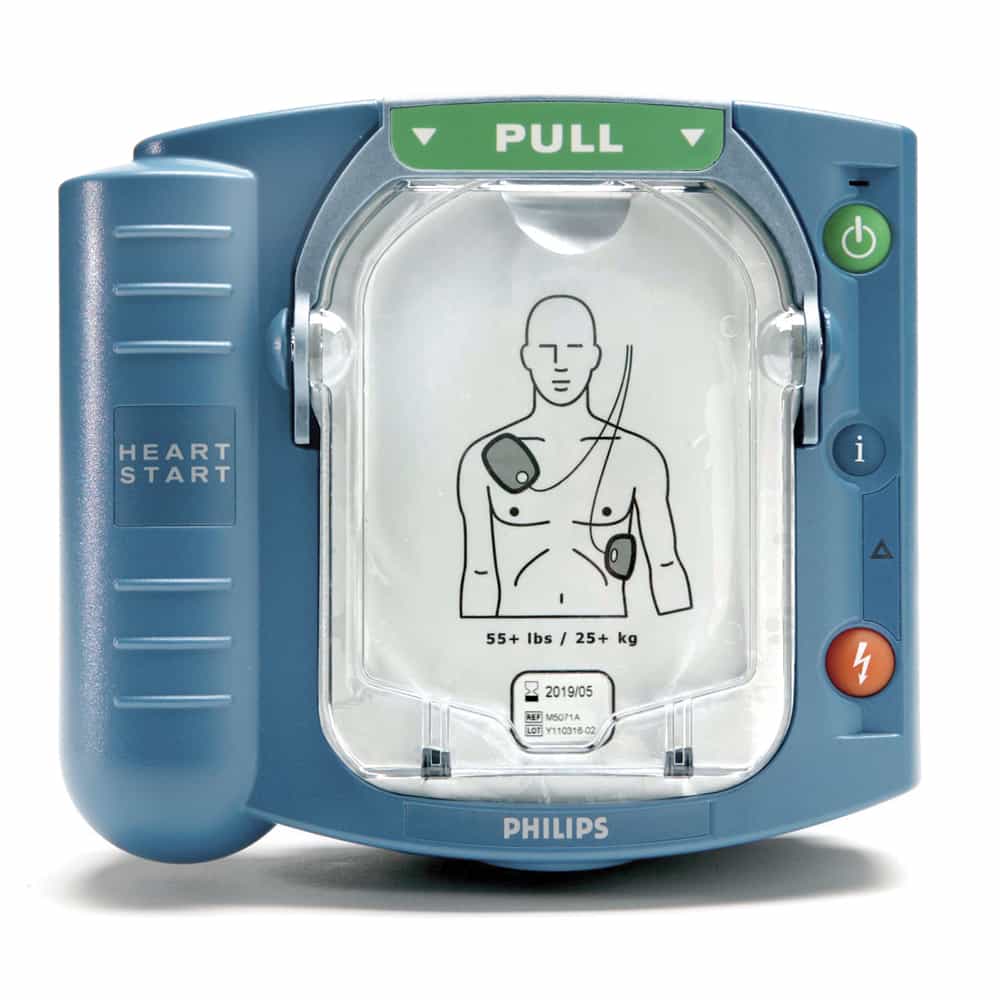
Your facility serves everyone from young children to senior citizens, and your AED must be able to adapt. This is where pediatric capability is non-negotiable. For children under 8 years old or weighing less than 55 pounds, specialized pediatric electrode pads are essential to deliver a lower, safer dose of energy. The best AEDs automatically detect these pads and adjust the shock level, removing a complex decision from the rescuer’s shoulders. You can learn more about the importance of pediatric AED pads for child safety on our blog.
Durability for high traffic environments
An AED in a school hallway, gymnasium, or community lobby needs to be tough. It must withstand occasional bumps, dust, and varying temperatures, especially if used for outdoor events. Look for a device with a high Ingress Protection (IP) rating, which indicates its resistance to dust and water. A rugged design ensures your investment is protected and that the device will function reliably when you need it most.
Long term readiness and cost of ownership
The initial purchase price is only part of the story. The total cost of ownership includes the long term expense of replacement batteries and electrode pads. Devices with longer lasting consumables, often up to four or five years, significantly reduce ongoing costs and maintenance burdens. Furthermore, modern AEDs perform daily, weekly, and monthly self tests to ensure they are always ready. This automated monitoring is your best guarantee that the device will work flawlessly in an emergency.
Why the Cardiac Science Powerheart G5 is a trusted choice for schools
Based on the evaluation framework, the Cardiac Science Powerheart G5 AED consistently emerges as an ideal solution for schools and community centers. It was designed specifically to meet the challenges of public access defibrillation.
Its RescueCoach™ technology provides real time, user paced voice and text prompts that guide responders confidently through the entire rescue process. For child safety, the G5 uses Intellisense™ pediatric pads that automatically reduce the energy level, ensuring a safe and effective shock for a child. Its rugged design and high IP55 rating protect it from dust and water, making it reliable for both indoor and outdoor use. Finally, the Powerheart G5 conducts daily self tests and features long life pads and batteries, giving you peace of mind while keeping long term costs down.
Beyond the device building a rescue ready program
Having the right AED is the first step. Creating a sustainable program ensures it is always ready and that your staff feels prepared to act. This involves more than just mounting a device on a wall.
A successful program includes strategic placement so an AED can be retrieved within a two to three minute walk from anywhere in your facility. It also requires a plan for managing and maintaining your devices. Response Ready offers comprehensive AED program management services through the Response Ready app to handle this for you. Our system automates readiness checks, tracks pad and battery expiration dates, and provides medical oversight to ensure your program remains compliant and effective.
Finally, confidence comes from practice. We provide a full menu of accessible CPR and AED training courses that empower your staff and volunteers to respond decisively in an emergency.

A step-by-step AED decision checklist linking device choice to placement, program enrollment, and training, designed to move school administrators from assessment to action.

Showcase survival gains, critical response windows, and Response Ready program management features to validate AED investments for schools and community centers.
Your simple path to becoming response ready
Making your facility safer doesn’t have to be complicated. With over a decade of expertise, Response Ready has simplified the process of purchasing and managing life saving technology.
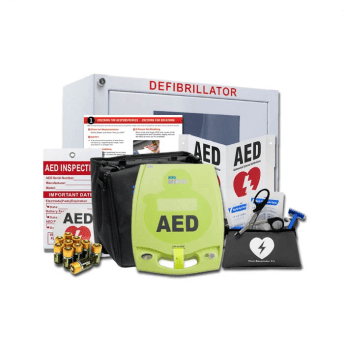
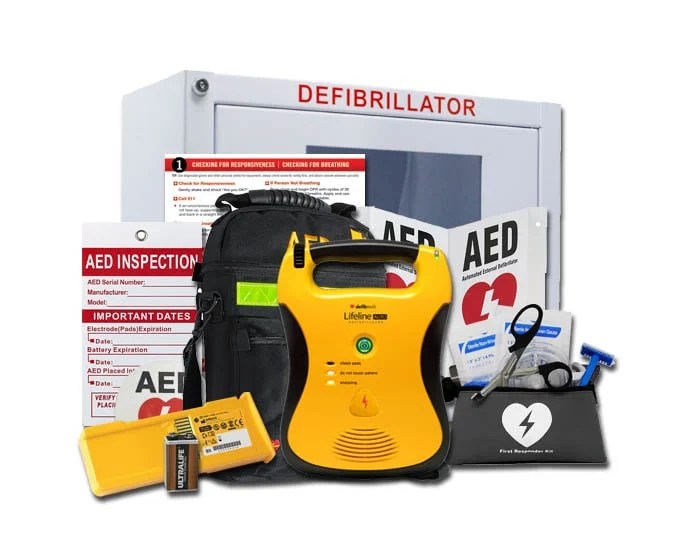
Start by exploring our curated selection of AED value packages, which include everything you need to get started. If you have questions or need a personalized recommendation, our expert team is available via live chat or phone to guide you. We’re here to be your partner in building a safer community.
Frequently asked questions
Q: Are AEDs legally required in schools?
A: Laws vary by state, but an increasing number of states mandate AEDs in schools, athletic facilities, and other public buildings. Regardless of legal requirements, having an AED is a recognized best practice for ensuring student and public safety. We recommend checking with your local authorities for specific regulations.
Q: What is the most important feature for an AED in a community center?
A: Ease of use is paramount. Because the user is likely to be an untrained bystander, the device must provide clear, simple, and calm instructions. Features like voice prompts, text displays, and automatic shock delivery are critical for a successful rescue in a public setting.
Q: How do we manage multiple AEDs across different buildings on a campus?
A: Managing multiple devices is simple with an AED program management service. Our Response Ready App allows you to track the status, battery life, and pad expiration dates for all your AEDs from one central dashboard. It automates monthly readiness checks and sends compliance reminders, making it easy to keep your entire campus prepared.
Q: Can anyone really use an AED, even without formal training?
A: Yes. Modern AEDs are designed for use by the general public. They analyze the patient’s heart rhythm and will only deliver a shock if one is needed. The device guides the user through every step, from pad placement to CPR. While formal training is always recommended to build confidence, it is not required to operate the device and save a life.