Why Do You Need an Earthquake Emergency Kit?
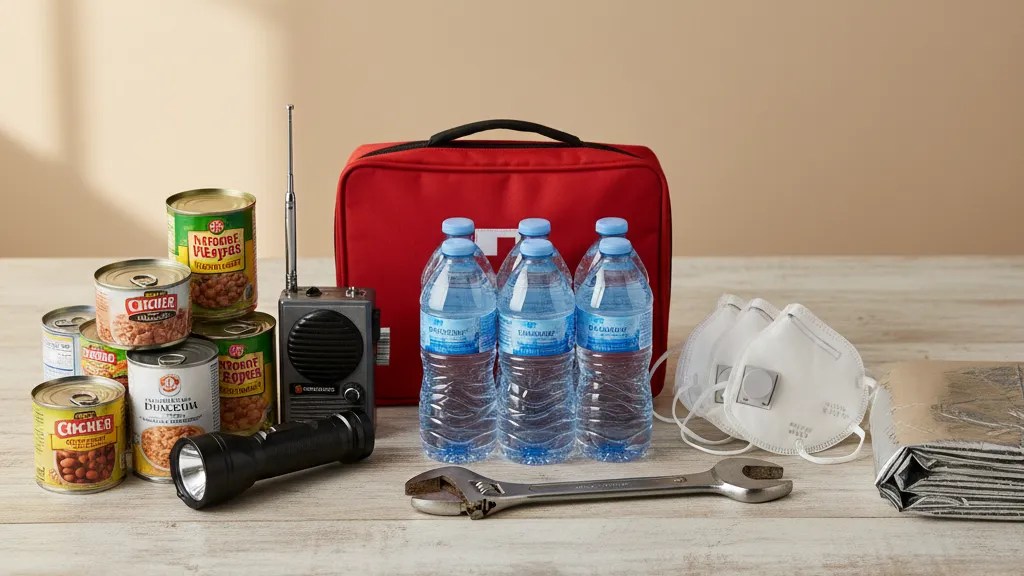
Earthquakes strike without warning. Unlike hurricanes or wildfires, there is no advance forecast, no evacuation order, and no time to prepare once the shaking starts. If you live in California, the Pacific Northwest, or anywhere along the West Coast, seismologists say a major earthquake is not a matter of if but when. The USGS estimates a 60% probability of a magnitude 6.7 or greater earthquake hitting the San Francisco Bay Area within the next 30 years.
When a significant quake hits, water mains break, power grids fail, roads crack, and emergency responders are overwhelmed. You could be on your own for 72 hours or longer. A well-stocked earthquake emergency kit is the single most practical step you can take to keep your family safe and self-sufficient during that critical window.
This checklist covers everything you need, organized by category so you can build your kit systematically. Whether you are starting from scratch or upgrading an existing kit, use this as your go-to reference.
Ready to get started? Response Ready’s Grab-and-Go 3-Day Emergency Kit covers the essentials for one person. For larger households or organizations, explore our full emergency preparedness kit collection.
Water and Hydration
Water is your top priority. After a major earthquake, municipal water supplies can be contaminated or completely shut off for days. FEMA recommends one gallon per person per day for drinking and basic sanitation.
- Drinking water: 1 gallon per person per day for a minimum of 3 days (7 days is better)
- Water purification tablets or a portable water filter as backup
- Collapsible water containers for refilling from emergency distribution points
- Water storage tip: Store commercially bottled water and rotate every 6 months
For a family of four, that means 12 gallons minimum. Store water in multiple locations, including your home, car, and workplace, so you have access no matter where you are when the earthquake hits.
Food and Nutrition
Pack non-perishable, calorie-dense foods that require no cooking or refrigeration. You need enough for each family member for at least 72 hours.
- Canned goods: Beans, tuna, chicken, soups, fruits, and vegetables (include a manual can opener)
- Dry goods: Granola bars, trail mix, crackers, peanut butter, dried fruit
- Ready-to-eat meals: MREs (Meals Ready to Eat) or freeze-dried options
- Comfort foods: Candy, instant coffee, tea bags (morale matters in a crisis)
- Special dietary items: Baby formula, pet food, allergy-safe snacks, medications that require food
Check expiration dates every 6 months. A good habit is to review your kit when you change your clocks for daylight saving time.
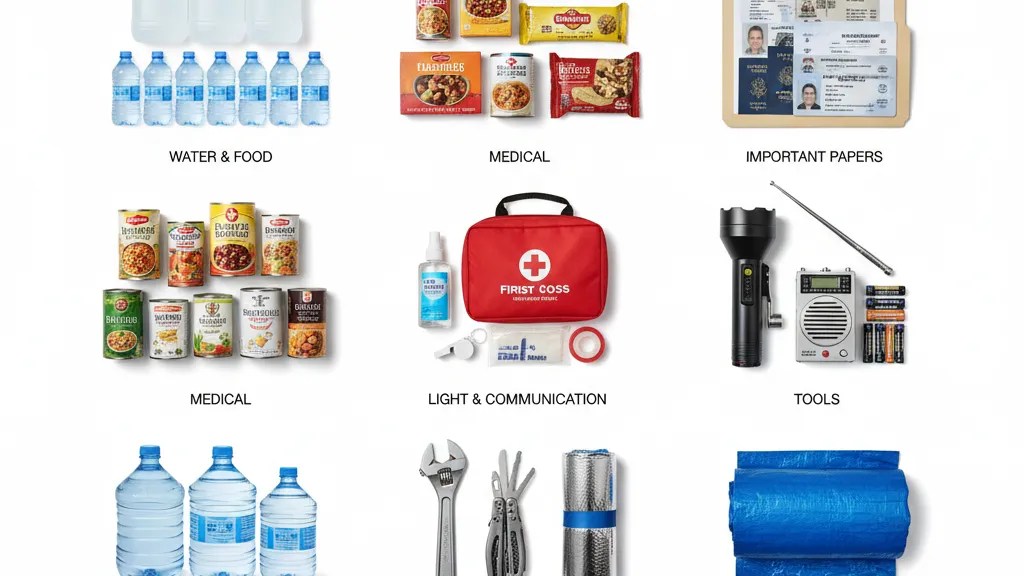
First Aid and Medical Supplies
Injuries are common after earthquakes. Broken glass, falling objects, structural collapse, and fires can cause cuts, fractures, burns, and crush injuries. A comprehensive first aid kit is not optional.
- Pre-assembled first aid kit with bandages, gauze, adhesive tape, antiseptic wipes, and antibiotic ointment
- Trauma supplies: Tourniquet, hemostatic gauze, chest seals (a bleeding control kit covers these essentials)
- Pain relievers: Ibuprofen, acetaminophen, and aspirin
- Prescription medications: At least a 7-day supply of any daily medications
- First aid manual or printed quick-reference card
- N95 dust masks (critical for post-earthquake dust and debris)
- Eye wash solution and protective eyewear
- Disposable gloves (multiple pairs)
For a portable option that covers the basics, the First Responder Kit is compact enough to store in a go-bag and includes essential wound care supplies.
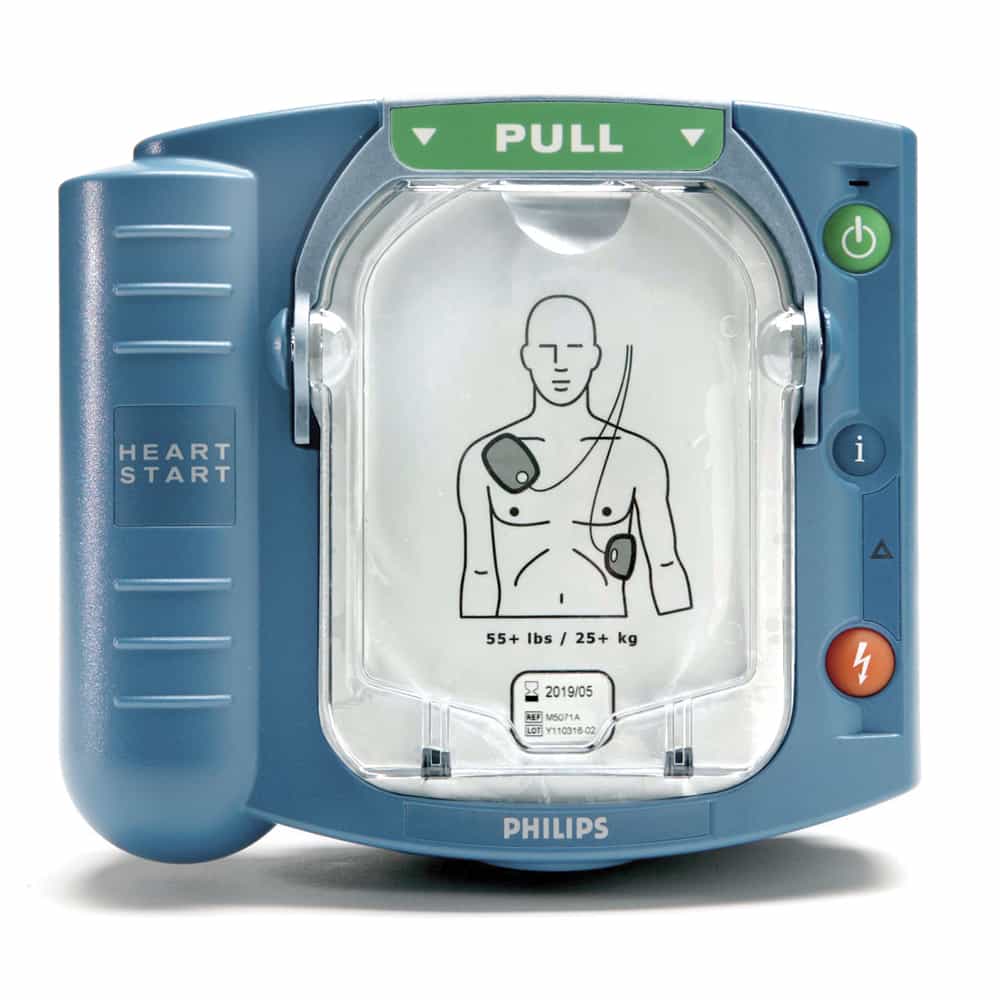
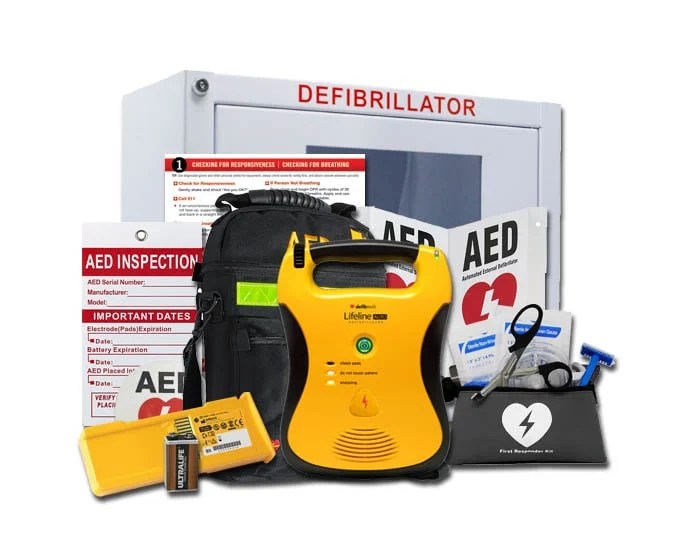
For organizations and buildings: Cardiac events can spike during and after major earthquakes due to extreme stress. Schools, offices, churches, and fitness centers should have an AED (Automated External Defibrillator) accessible alongside their emergency kit. An AED can be the difference between life and death during a sudden cardiac arrest, and bystanders with minimal training can use one effectively. Browse AEDs from all 6 FDA-approved manufacturers.
Light, Communication, and Power
After a major earthquake, expect extended power outages. Cell towers may be damaged or overloaded. Having backup communication and light sources is essential for safety and coordination with rescue teams.
- Flashlights: LED flashlights with extra batteries (avoid candles due to gas leak risk)
- Headlamp: Hands-free lighting for navigating debris or performing first aid
- Battery-powered or hand-crank NOAA weather radio for emergency broadcasts
- Portable phone charger / power bank: At least 10,000 mAh capacity, fully charged
- Solar charger: For extended outages lasting more than 3 days
- Whistle: For signaling rescuers if trapped (louder and more reliable than your voice)
- Spare batteries: AA, AAA, and any specialty sizes for your devices
Keep your phone charged above 50% as a daily habit if you live in an earthquake-prone area. Download offline maps of your area and save emergency contacts as paper copies, not just phone contacts.
Tools, Safety, and Shelter
Earthquakes damage buildings, rupture gas lines, and create hazardous debris fields. The right tools help you shut off utilities, clear paths, and protect yourself from secondary hazards.
- Adjustable wrench or gas shutoff tool (know where your gas valve is before an earthquake)
- Multi-tool with pliers, knife, and screwdriver
- Work gloves: Heavy-duty leather or cut-resistant for handling broken glass and debris
- Sturdy shoes: Keep a pair by your bed (broken glass on the floor is one of the most common post-earthquake injuries)
- Dust masks or N95 respirators
- Emergency blankets (Mylar space blankets are lightweight and retain body heat)
- Tarp and paracord: For improvised shelter if your home is unsafe to re-enter
- Duct tape and heavy-duty garbage bags (multiple uses: shelter patching, waste disposal, waterproofing)
- Fire extinguisher: Small ABC-rated extinguisher for post-quake fires
- Crowbar or pry bar: For opening jammed doors or clearing light debris
Documents and Personal Items
After a major earthquake, you may not be able to return to your home for days or weeks. Having copies of critical documents can speed up insurance claims, access emergency assistance, and prove your identity.
- Copies of IDs: Driver’s licenses, passports, Social Security cards
- Insurance documents: Homeowner’s/renter’s insurance policy numbers and agent contact info
- Medical records: List of prescriptions, allergies, and conditions for each family member
- Emergency contact list: Printed on paper, not just saved in your phone
- Cash: Small bills ($1s, $5s, $10s) since ATMs and card readers will be down
- Photos of property: Pre-earthquake documentation for insurance claims (store digitally on a USB drive)
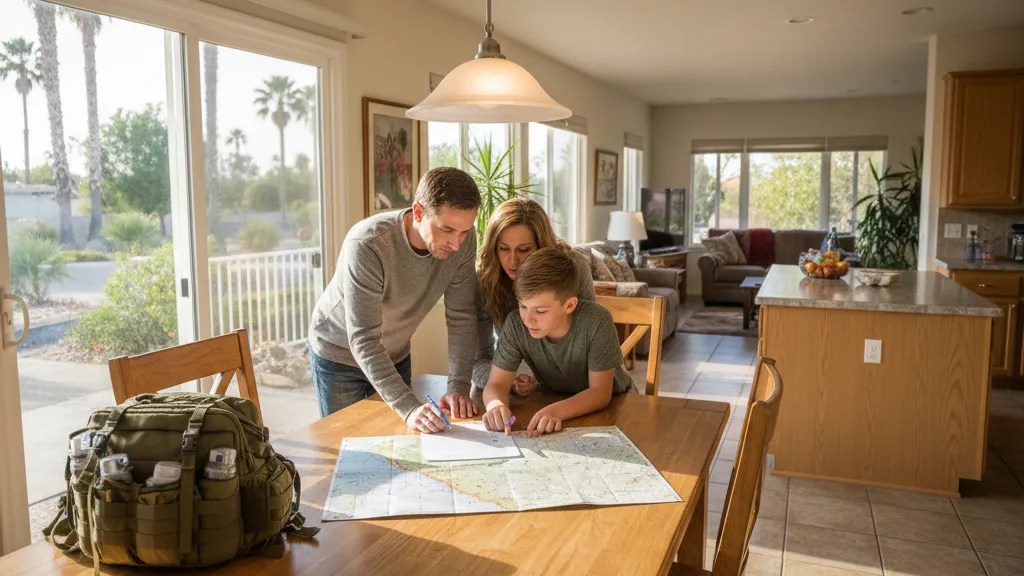
- Local maps: Paper maps of your city and region showing evacuation routes
Store documents in a waterproof bag or container inside your go-bag. Keep digital backups on a password-protected USB drive and in cloud storage.
Hygiene and Sanitation
When water systems fail, basic hygiene becomes a challenge. Lack of sanitation can quickly lead to illness, which compounds an already difficult situation.
- Toilet supplies: 5-gallon bucket with snap-on toilet seat lid, heavy-duty trash bags, and kitty litter for waste absorption
- Hand sanitizer and disinfecting wipes
- Soap (bar soap lasts longer than liquid in an emergency)
- Toilet paper and paper towels
- Feminine hygiene products
- Toothbrush and toothpaste
- Garbage bags with ties for waste containment
Building your kit piece by piece? Start with a pre-assembled 3-day emergency kit as your foundation, then add specialized items from this checklist. For workplaces and larger groups, the 10-Person Shelter-In-Place Kit or the SecurEvac 30-Person Survival Kit provides organized, ready-to-deploy supplies. See all emergency preparedness kits.
Earthquake Kit Tiers: What Size Kit Do You Need?
Not every household needs the same earthquake kit. The right size depends on how many people you are preparing for, whether you have pets or family members with special needs, and how long you want to be self-sufficient. Use this table to match your household to the right kit tier.
| Kit Tier | Household Size | Water Needed | Food Supply | First Aid Level | Recommended Kit |
|---|---|---|---|---|---|
| Basic (72-hour) | 1-2 people | 3-6 gallons | 6-12 MREs or equivalent | Personal first aid kit | Grab-and-Go 3-Day Kit |
| Standard (7-day) | 3-5 people | 21-35 gallons | Canned goods + dry goods for 7 days | Comprehensive first aid + bleeding control kit | 10-Person Shelter-In-Place Kit |
| Extended (14-day) | 6+ people or special needs | 42+ gallons + water filter | Freeze-dried meals + canned goods + supplements | Trauma kit + AED for organizations | SecurEvac 30-Person Kit |
If you have infants, elderly family members, or pets, add at least 25% more supplies to your baseline. Infants need formula, diapers, and specialized food. Elderly family members may require extra prescription medications, mobility aids, and warm clothing. Pets need food, water, carriers, and copies of vaccination records.
California and West Coast Earthquake-Specific Tips
If you live in California, Oregon, Washington, or Alaska, your earthquake risk is among the highest in the nation. Here are region-specific additions to your earthquake preparedness kit.
- Secure heavy furniture: Bolt bookshelves, water heaters, and TVs to wall studs. Furniture-securing kits are inexpensive and can prevent serious injuries.
- Know your gas shutoff: California homes are especially vulnerable to post-earthquake gas leaks and fires. Tag your gas meter and keep the shutoff wrench attached to the meter.
- Tsunami zone awareness: If you are within a coastal tsunami zone (common in Northern California, Oregon, and Washington), know your evacuation route to high ground. Store a go-bag in your car at all times.
- Earthquake insurance: Standard homeowner’s insurance does not cover earthquake damage in California. Evaluate coverage through the California Earthquake Authority (CEA) or a private insurer.
- Retrofit older homes: Pre-1980 California homes with cripple walls or unreinforced masonry foundations are at high risk. Many cities offer retrofit incentive programs.
- Join your local CERT team: Community Emergency Response Teams provide training and coordination that multiplies your preparedness beyond your own household.
The Family Disaster Plan Checklist is a helpful companion resource for building your household’s communication and evacuation plan alongside your kit.
How Should You Store and Maintain Your Earthquake Survival Kit?
A packed kit that you never check is almost as risky as having no kit at all. Here is how to keep your earthquake survival kit ready to go.
- Location: Store your main kit in an easily accessible spot near an exit, such as a garage, hallway closet, or under a sturdy table near the front door. Avoid basements if you live in a flood-prone area.
- Go-bag: Keep a smaller grab-and-go bag with 24 hours of essentials in your car and at your workplace.
- Maintenance schedule: Review and rotate supplies every 6 months. Replace expired food, water, batteries, and medications.
- Temperature: Store food and water away from extreme heat. A climate-controlled interior closet is ideal.
- Family drills: Practice your earthquake response plan at least once a year. Make sure every family member knows where the kit is, how to shut off gas and water, and where to meet after an earthquake.
Earthquake Emergency Kit Checklist FAQ
How much water should I store for an earthquake kit?
FEMA recommends one gallon of water per person per day for at least three days. For a family of four, that is a minimum of 12 gallons. Seven days of supply is better for major earthquake scenarios where infrastructure may be heavily damaged.
What is the most important item in an earthquake emergency kit?
Water is the single most critical item. You can survive weeks without food but only about three days without water. After water, a first aid kit and flashlight with extra batteries are the next highest priorities.
Should I include an AED in my earthquake preparedness plan?
For homes, an AED is optional but valuable if someone in your household has cardiac risk factors. For organizations, schools, offices, gyms, and churches, an AED should be part of your emergency preparedness equipment. Sudden cardiac arrest events increase during and after major earthquakes due to extreme physical and emotional stress.
How often should I update my earthquake kit?
Check your kit every six months. A good reminder is to review it when you change clocks for daylight saving time. Replace expired food, water, medications, and batteries. Update documents and contact lists as needed.
What size earthquake kit do I need for my workplace?
For small offices (under 10 people), a 10-person shelter-in-place kit provides the basics. For larger buildings, scale up with multiple kits or a 30-person evacuation survival kit. Every workplace should also have a first aid station and, ideally, an AED.
Do I need a separate earthquake kit for my car?
Yes. Keep a compact go-bag in your car with water, non-perishable snacks, a first aid kit, flashlight, emergency blanket, sturdy shoes, and a phone charger. If an earthquake strikes while you are commuting, you need supplies immediately accessible.